Turkey Tail Mushrooms are Deep-Rooted In Science In the dense forests of North America, Europe, and…
The Ultimate Guide to Chaga: The “King of Mushrooms” for Antioxidant Protection and Cellular Longevity
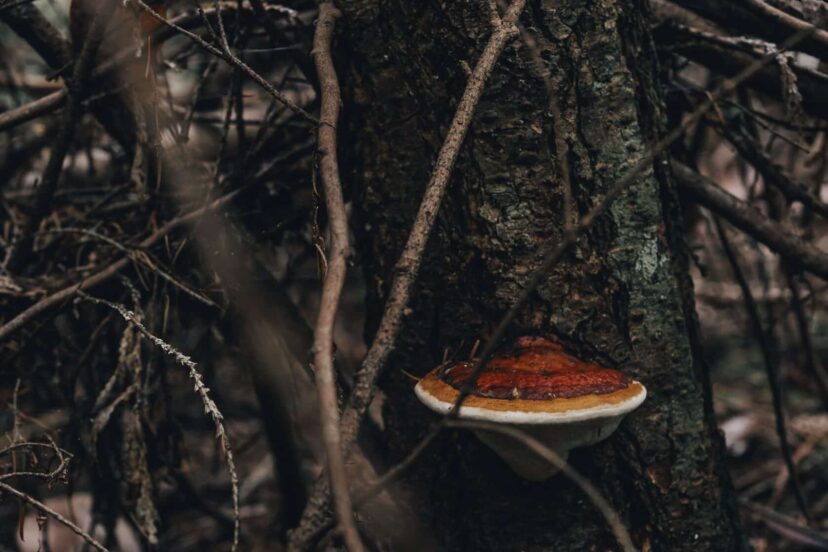
The Chaga Mushrooom: Historical Knowledge, Medicinal Value, and Intrinsic Attributes
While most functional fungi thrive on decaying forest floors or dead logs, Chaga (Inonotus obliquus) prefers a far more dramatic lifestyle.
Thriving in the sub-zero temperatures of the Siberian, Canadian, and Northern European boreal forests, Chaga grows almost exclusively on the trunks of living birch trees. It survives by absorbing and concentrating the life-force nutrients
of its host over decades, weathering brutal arctic conditions.
Historically revered as the “King of Mushrooms” or the “Gift from God” in Siberian folklore, Chaga is not your typical soft, umbrella-shaped fungus.
Visually, it resembles a rough, cracked chunk of burnt charcoal—a sterile growth known as a sclerotium. Yet, breaking open its charred black exterior reveals a rich, golden-amber core packed with some of the highest concentrations of life-extending nutrients found on the planet.
Here is an analytical look at the science, active compounds, and cellular benefits of this rugged forest medicine.
1. The Chemistry of Longevity: The Ultimate Antioxidant Buffer
The cornerstone of Chaga’s legendary status in modern health and wellness circles is its unprecedented antioxidant profile.
Every day, the human body is subjected to oxidative stress driven by UV radiation, environmental pollutants, poor diet, and natural metabolic processes. This stress generates free radicals—unstable molecules that damage healthy cells, mutate DNA, and accelerate the aging process (a phenomenon known as “inflammaging”).
To measure a substance’s ability to neutralize these destructive free radicals, scientists use the ORAC scale (Oxygen Radical Absorbance Capacity).
Chaga consistently registers some of the highest ORAC scores of any natural material on Earth, dramatically outperforming celebrated superfoods like acai berries, blueberries, and pomegranates.
[ORAC Score / Antioxidant Power Potency]
Chaga: ████████████████████████████████████████ (Highest)
Acai Berries: ██████████
Blueberries: ███
This monumental antioxidant load is driven by a unique trifecta of bioactive compounds: Superoxide Dismutase (SOD)
Chaga is exceptionally rich in SOD, an incredibly potent enzyme that serves as the body’s first line of defense against cellular oxidation. SOD safely breaks down dangerous superoxide radicals before they can cause damage to vital cellular structures.
Melanin
The deep, jet-black exterior of Chaga is caused by a massive concentration of high-molecular-weight melanin. When ingested, this fungal melanin provides powerful systemic protection, helping shield skin and internal tissues from UV damage and oxidative degradation.
Polyphenols and Flavonoids
These plant-and-fungal compounds hunt down secondary free radicals, exerting a powerful anti-inflammatory effect across blood vessels and vital organs.
2. The Host Advantage: Betulinic Acid and Birch Synergy
What makes Chaga unique among all medicinal mushrooms is its parasitic relationship with the host birch tree. Chaga acts as a biological siphon, drawing out a compound called betulin from the birch bark.
The fungus then metabolically processes this molecule, converting it into a highly bioavailable, human-compatible derivative known as betulinic acid.
Betulinic acid is a major focus of contemporary biomedical research. Clinical and preclinical studies indicate that betulinic acid possesses powerful pro-apoptotic properties—meaning it helps the body identify mutated or damaged cells and safely triggers their natural, programmed elimination before they can replicate.
Furthermore, betulinic acid works synergistically with Chaga’s internal polysaccharides to support cardiovascular elasticity and healthy cholesterol regulation.
3. Immune Modulation and Anti-Inflammatory Action
Like its peer adaptogens, Chaga contains complex long-chain carbohydrates called beta-glucans. These structures do not directly fight diseases; instead, they serve as an elite training manual for your immune system.
When you consume Chaga, these beta-glucans interface with receptors on white blood cells, such as macrophages and natural killer (NK) cells, optimizing their alertness. If your immune system is lagging, Chaga provides a healthy boost.
Conversely, Chaga is highly effective at down-regulating an overactive immune response. Chronic, low-grade inflammation is a primary driver of modern lifestyle diseases, driven by the overproduction of inflammatory proteins called cytokines.
Chaga’s unique triterpenes have been shown in laboratory studies to selectively inhibit the expression of these pro-inflammatory cytokines, acting as a natural brake pad for chronic bodily inflammation.
4. Metabolic and Blood Sugar Support
Emerging clinical updates continue to explore Chaga’s role in metabolic health, particularly in supporting blood glucose regulation and insulin sensitivity.
The unique polysaccharides found within Chaga extracts help modulate carbohydrate metabolism. Animal models and early-stage human trials show that Chaga can help flatten blood sugar spikes after carbohydrate-heavy meals.
By taking the pressure off the pancreas to constantly pump out insulin, Chaga serves as a protective tool for maintaining metabolic flexibility and combating insulin resistance.
5. Sourcing, Preparation, and Sustainability
Because Chaga is a slow-growing wild organism, knowing how it is sourced and processed is paramount to both its efficacy and the preservation of global forests.
Wild-Harvested vs. Lab-Grown
Unlike Cordyceps or Lion’s Mane, which can be cultivated cleanly in labs on organic substrates, lab-grown Chaga (mycelium on grain) lacks access to the living birch host.
Without the birch tree, lab-grown Chaga cannot produce betulinic acid. Therefore, to get the full spectrum of its benefits, always source wild-harvested Chaga taken sustainably from living trees in pristine, unpolluted northern climates.
The Extraction Mandate
Chaga’s therapeutic compounds are locked inside a rigid, woody matrix of chitin and lignin. Drinking raw, unextracted Chaga powder will yield virtually zero health benefits.
● Hot Water Extraction: Essential to break down the wood fibers and unlock the water-soluble beta-glucans and polyphenols.
● Dual Extraction (Alcohol & Water): Required if you want to capture the fat-soluble triterpenes and betulinic acid. For maximum longevity support, a dual-extract powder or liquid tincture is the gold standard.
Traditional Chaga Tea
For a daily wellness ritual, wild Chaga chunks can be slowly simmered in hot water (just below boiling, around 160°F to 180°F) for several hours to create a deeply restorative, dark amber tea with a flavor profile reminiscent of vanilla and black tea.
Conclusion
Chaga is a masterclass in natural resilience. By thriving in the harshest environments on Earth and distilling the biological intelligence of the northern birch forests, this unassuming black fungus offers an unparalleled shield against the stresses of modern life.
By neutralizing oxidative stress, delivering potent birch-derived compounds, and stabilizing the immune response, the “King of Mushrooms” remains an invaluable ally for long-term cellular vitality.

More to Explore